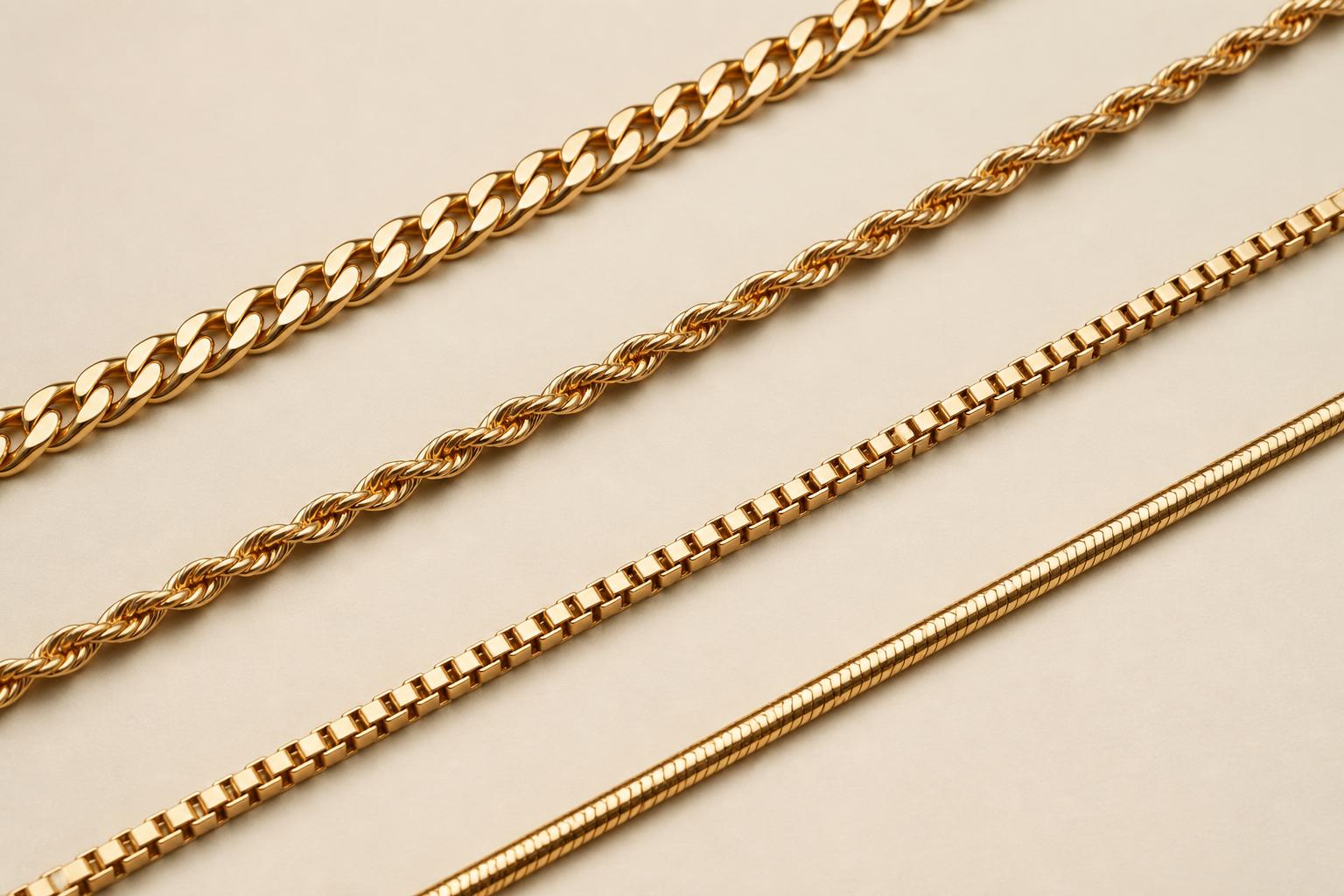
Chains are not interchangeable. The link pattern decides how much weight it holds, how it catches light, and how likely it is to kink.
The main types
- Cable: simple oval links. Light, versatile, easy to repair. The default for pendants.
- Curb: flattened, interlocking links. Strong and lies flat — good for bolder looks.
- Rope: twisted strands with the most sparkle. Strong, but repairs are harder.
- Box: square links, very smooth. Excellent for heavy pendants; can kink if bent sharply.
- Snake: sleek and seamless. Beautiful, but prone to permanent kinks — the most fragile of the group.
- Paperclip: elongated links, modern, ideal for layering.
Matching chain to pendant
The chain should be visually thinner than the pendant but strong enough to carry it. For anything heavier than a coin, choose box or curb — never snake.
Clasps matter too
Lobster clasps are the most secure. Spring rings are fine for light chains but wear out. If you take a necklace off daily, invest in a good clasp.
Browse chains and pendants at BLYN.